


Introduction: The Rising Demand for Cardiac Specialists
Heart diseases are no longer restricted to older populations; they have become a global concern across all age groups. According to recent medical studies, cardiovascular issues account for more than 30% of global deaths every year. This alarming statistic has placed cardiac healthcare at the forefront of medical innovation — creating a growing demand for specialized professionals who can assist cardiologists and operate advanced cardiac diagnostic equipment.
The BSc Cardiac Technology course is designed to meet this rising demand. It combines the disciplines of medicine and technology to produce experts capable of handling sophisticated cardiac instruments, interpreting test results, and supporting surgeons during life-saving procedures. This career path not only provides financial stability but also gives professionals the opportunity to make a direct impact on patients’ lives.
What is BSc Cardiac Technology?
BSc Cardiac Technology is an undergraduate degree program that trains students in diagnosing and monitoring cardiovascular diseases using advanced medical technology. Typically spanning three to four years, the course integrates classroom learning, laboratory training, and clinical exposure in hospitals.
The primary goal of this program is to create professionals who can efficiently assist in cardiac procedures like angioplasty, pacemaker implantation, and open-heart surgeries. Students gain in-depth knowledge of cardiac anatomy, physiology, biochemistry, medical electronics, and patient care.
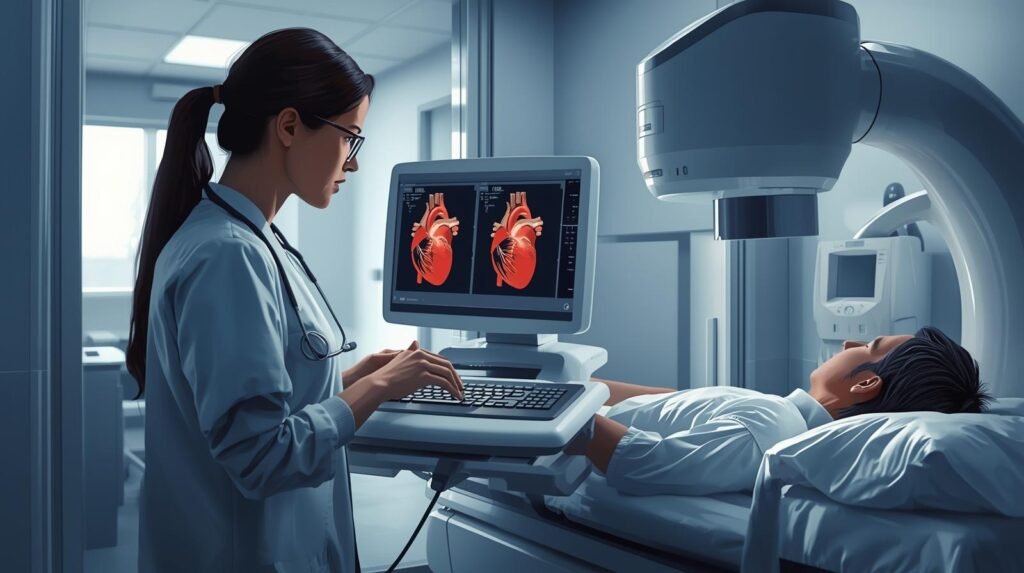
By the end of the program, graduates are capable of managing cardiac care units, handling emergency cases, and performing non-invasive diagnostic tests such as Electrocardiography (ECG) and Echocardiography.
Eligibility and Admission Process
To enroll in a BSc Cardiac Technology course, candidates must meet the following basic criteria:
- Successful completion of 10+2 or equivalent examination with Physics, Chemistry, and Biology as core subjects.
- Minimum aggregate marks of 50%, though some reputed universities may require higher percentages.
- Admissions can be either merit-based or through entrance examinations conducted by individual universities or medical boards.
Top universities offering this course include:
- Manipal Academy of Higher Education
- Amrita Vishwa Vidyapeetham, Coimbatore
- Sri Ramachandra Institute of Higher Education and Research, Chennai
- Rajiv Gandhi University of Health Sciences, Bengaluru
- KLE University, Belagavi
Some colleges also include interviews and aptitude assessments to ensure that students have both academic knowledge and the compassion required for medical service.
Curriculum and Course Structure
The BSc Cardiac Technology program is structured to provide both theoretical and practical expertise. Over the duration of three to four years, students study a diverse range of subjects including:
- Human Anatomy and Physiology
- Biochemistry and Pathology
- Cardiac Care Technology
- Applied Physics and Medical Electronics
- Echocardiography and Cardiac Imaging
- Critical Care and Life Support
- Pharmacology for Cardiac Health
- Research Methodology and Hospital Management
During the final year, most programs include a clinical internship, allowing students to work under experienced cardiologists in real hospital environments. This internship enhances hands-on experience in performing procedures like stress tests, cardiac catheterization, and heart rhythm analysis.
Skills Developed During the Course
The BSc Cardiac Technology course emphasizes both technical and interpersonal skills, ensuring that graduates are ready to handle real-world challenges in healthcare.
Key skills developed include:
- Technical Proficiency: Understanding and operating complex medical devices like ECG, ECHO, and Holter monitors.
- Analytical Thinking: Accurately interpreting cardiac data and identifying abnormalities.
- Emergency Response: Assisting in critical cardiac events and providing immediate technical support.
- Patient Care: Managing patient communication and ensuring comfort during diagnostic procedures.
- Team Collaboration: Working with doctors, surgeons, and nurses in high-pressure environments.
These skills ensure that cardiac technologists are indispensable in hospitals and clinics.
Why Choose BSc Cardiac Technology?
Choosing BSc Cardiac Technology offers numerous advantages for students passionate about healthcare and technology.
- High Demand: With cardiovascular diseases increasing globally, trained technologists are in high demand.
- Rewarding Career: Every diagnosis or procedure contributes to saving lives, giving immense professional satisfaction.
- Technological Exposure: Students learn cutting-edge cardiac technologies and assist in high-tech surgeries.
- Global Recognition: The degree opens doors to job opportunities across the world, particularly in the Middle East, UK, and USA.
- Scope for Growth: The field offers continuous learning, research options, and postgraduate study pathways.
Career Opportunities After BSc Cardiac Technology
Graduates can pursue multiple roles in hospitals, diagnostic centers, and research facilities. Some of the popular job profiles include:
- Cardiac Technologist: Assists cardiologists in diagnosing and treating patients with heart disorders.
- Echocardiographer: Specializes in performing ultrasound imaging of the heart.
- Cardiac Sonographer: Uses imaging tools to assess heart structure and performance.
- Cath Lab Technician: Operates in catheterization labs to monitor patients during invasive cardiac procedures.
- Medical Research Assistant: Participates in research on new cardiac technologies and treatments.
- Cardiac Rehabilitation Specialist: Helps patients recover after cardiac surgeries through exercise and therapy programs.
Average starting salaries in India range between ₹3 to ₹6 LPA, and experienced professionals earn ₹8–12 LPA or more. Abroad, the average annual salary ranges between $50,000–$90,000, depending on qualifications and experience.
Challenges Faced in the Profession

Like any medical profession, cardiac technology comes with challenges:
- Long working hours and high-pressure emergency situations.
- Continuous technological upgrades that require ongoing learning.
- Emotional stress from dealing with critical or terminally ill patients.
However, professionals who are passionate about patient care and medical innovation find these challenges deeply rewarding.
Future Scope and Global Opportunities
The global demand for cardiac technologists is expected to increase by over 20% in the next decade. With healthcare systems becoming more advanced, the role of technologists in cardiac imaging, monitoring, and research will expand dramatically.
New-age technologies like AI-based cardiac diagnostics, robotic surgeries, and remote patient monitoring are redefining the field. Cardiac technologists will be key players in integrating these innovations into patient care.
Students who wish to pursue higher education can opt for postgraduate degrees such as:
For a detailed guide on the role, skills, and career opportunities of a Cath Lab Tech, check out our full article here
- MSc in Cardiac Technology
- Master of Hospital Administration (MHA)
- MBA in Healthcare Management
- Postgraduate Diploma in Cardiac Imaging or Medical Technology
These programs allow specialization and pave the way for leadership or research-oriented roles in healthcare organizations.
Comparison with Other Allied Health Courses
While BSc Nursing and BSc Medical Laboratory Technology focus on general patient care and diagnostic testing, BSc Cardiac Technology offers a more specialized focus on heart health. It involves working closely with cardiologists and using advanced equipment that demands both precision and scientific understanding.
Compared to traditional degrees, cardiac technology graduates often enjoy better job stability, higher salaries, and international mobility.
Conclusion: A Career That Beats with Purpose
The BSc Cardiac Technology course is not just another academic program — it’s a pathway to a fulfilling career that directly saves lives. It equips students with the skills, knowledge, and compassion to serve humanity while keeping pace with technological advancement.
With a steady increase in cardiac patients worldwide, the role of a cardiac technologist is becoming more vital than ever. If you’re passionate about healthcare, technology, and patient well-being, this course can be your gateway to a promising and meaningful profession.
FAQs
Q1. What is the duration of the BSc Cardiac Technology course?
It typically lasts three to four years, including clinical internships and hospital training.
Q2. Is BSc Cardiac Technology a good career choice?
Yes. It offers high demand, job stability, and rewarding career opportunities across hospitals and research institutions.
Q3. Can I work abroad after completing BSc Cardiac Technology in India?
Absolutely. Many countries, especially the Gulf, UK, and USA, have a shortage of skilled cardiac technologists.
Q4. What postgraduate options are available after BSc Cardiac Technology?
Students can pursue MSc Cardiac Technology, Hospital Administration, or advanced diplomas in cardiac imaging.
Q5. What is the average starting salary in this field?
In India, fresh graduates earn between ₹3–6 LPA, while experienced professionals abroad can earn up to $90,000 annually.
